
When is Teacher Appreciation Week?
In the United States it is the first full week of May, with National Teacher Day on the Tuesday. In the UK there is no single week; many schools use the end of the summer term, and World Teachers’ Day is 5 October.
Free · made on your device · no watermark
One short film with a photo, drawing or ten-second clip from every pupil, for Teacher Appreciation Week, the last day of term or a teacher who is leaving.
Free, no account needed
Teacher appreciation is easiest to show with everyone in it: a short film in which each pupil holds up a drawing or says one sentence, framed by a title card and a song. Gather the clips and photos, open a teachers template here, add them in order, write the class’s message and export one MP4 to play in class or send to the teacher.
In the United States, Teacher Appreciation Week is the first full week of May (3 to 7 May in 2027); in the UK many schools choose the last week of the summer term. Either way, the hard part is collecting from thirty families, so most of this page is about organising. For one child’s personal note, the thank you teacher page is quicker.
Ask families for one landscape clip of ten to fifteen seconds, or a photo of the child with a drawing, by a set date. Save everything into one folder with the children’s first names as file names so the order is easy.
Choose a design under Templates. Keep Format on Landscape 16:9 for a classroom screen, which also matches clips filmed sideways on a phone.
Press Add photos or clips and pick the clips in the order you want them to play: alphabetical is the easiest to defend.
Write an opening and closing line in Text (“To our teacher, from Class 4”), then add a song with Add music under Music.
Press Play and watch to the end, checking every child appears. Then Export video and Download video.
Open one to start; every word, photo and the shape can be changed. All teachers and school templates
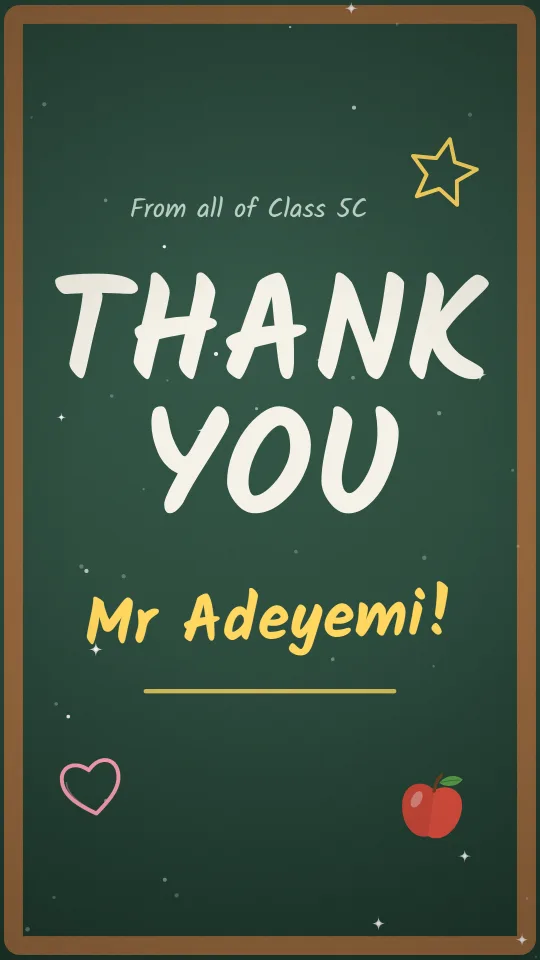
A wood-framed green chalkboard, chalky handwriting and taped-up class photos
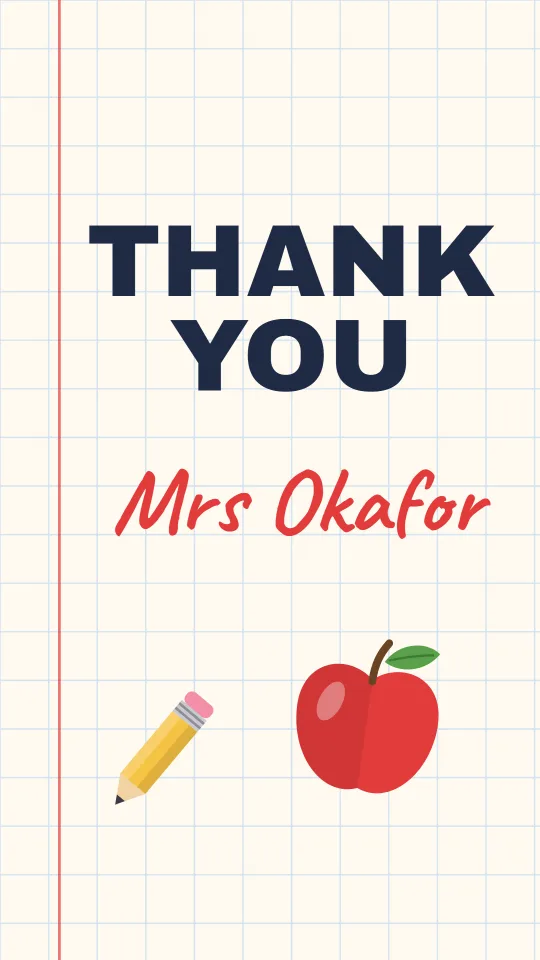
An exercise-book page with a red margin, a shiny apple, a yellow pencil and an A+ stamp
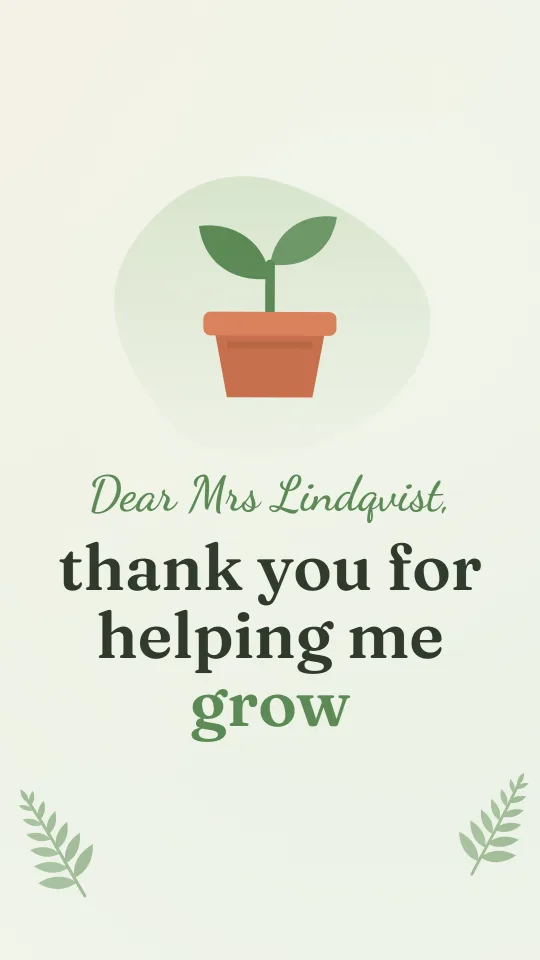
Sage watercolour, a little seedling and arched photos for a teacher who helped someone bloom
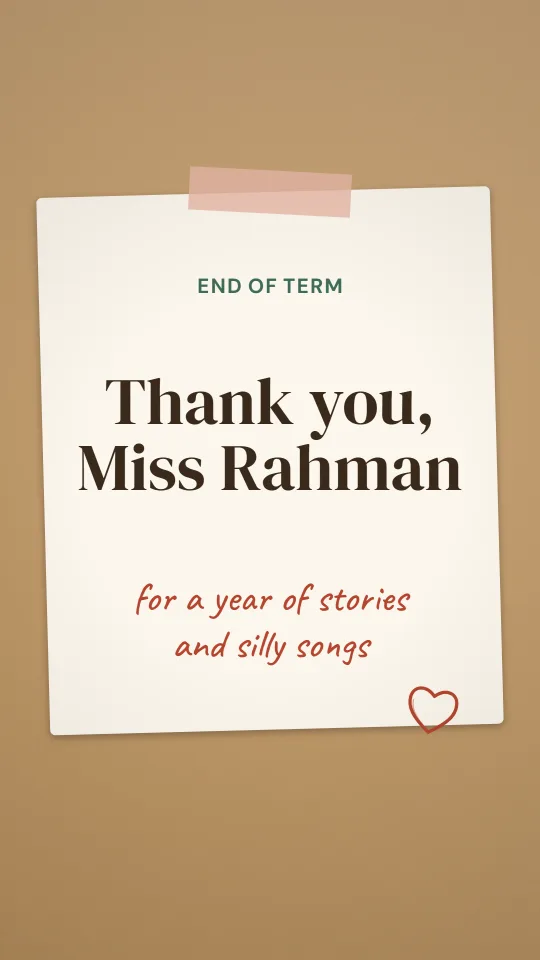
Kraft-paper scrapbook pages with a cream card, washi-taped polaroids and handwritten notes
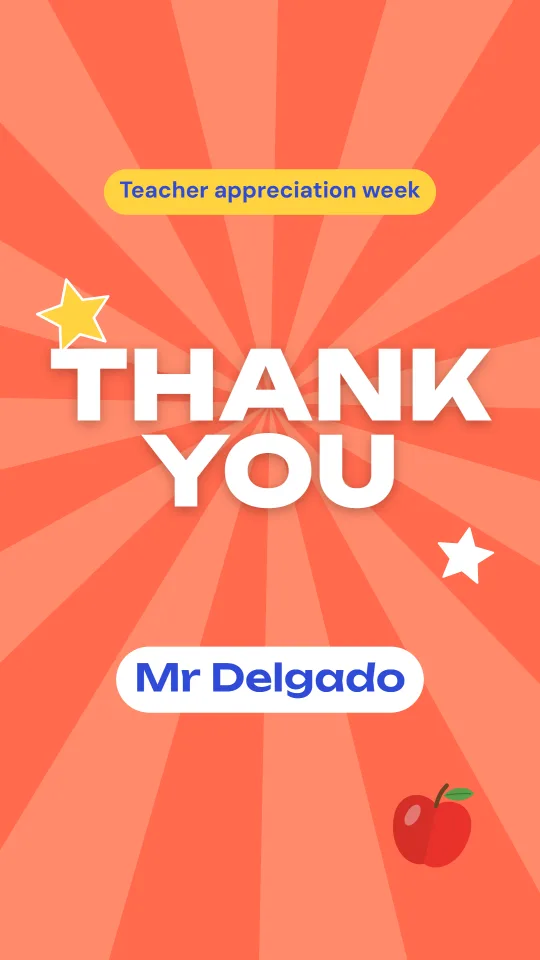
Coral sunburst, chunky stacked type and yellow pill labels for Teacher Appreciation Week
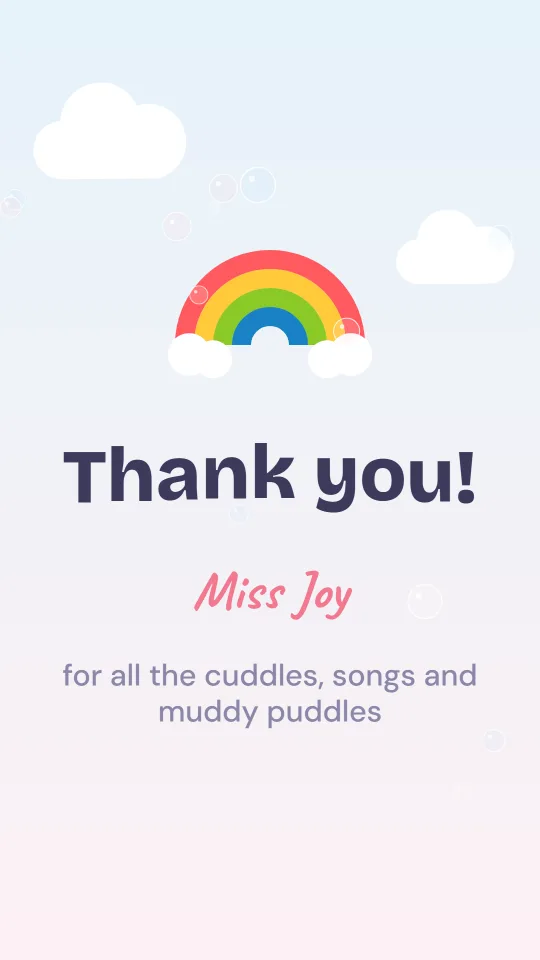
Pastel sky, floating clouds, a little rainbow and round photos for nursery staff and teaching assistants
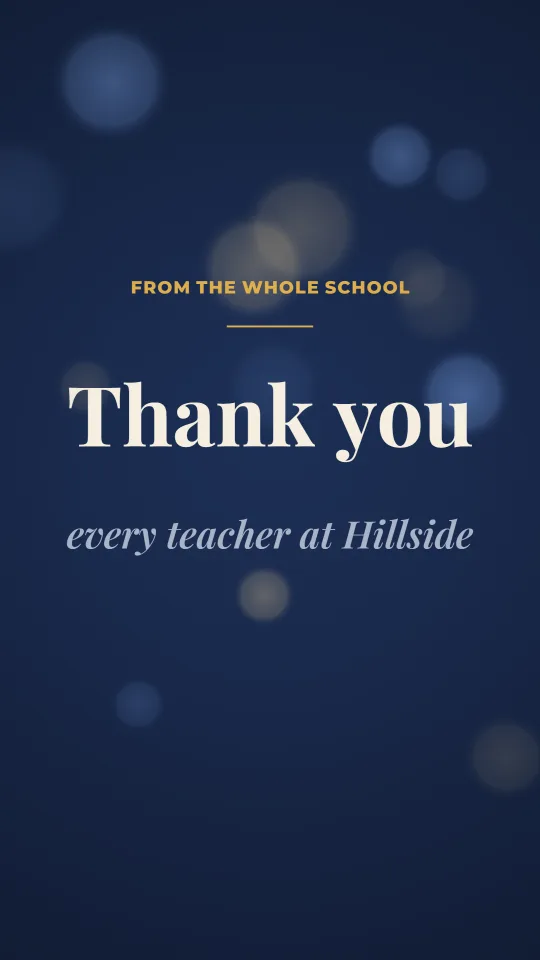
A widescreen navy and gold film with framed photos, a gold laurel and room for the whole school to sign off
A bouncing red apple and a cheery hand-lettered thank-you as a looping square GIF
The video is only a success if every pupil is in it, and roughly equally. A few habits make that easy:
Some schools and parent associations thank every adult at once: teachers, assistants, office, kitchen and site staff. Give each team its own short section with a title card rather than trying to name everyone individually.
Play a whole-class film on the last afternoon before the week ends, and send the teacher the file to keep. A whole-staff film suits a staff briefing first, then the school newsletter. For gifts and other gestures that go with it, see the teacher appreciation ideas.
In the United States it is the first full week of May, with National Teacher Day on the Tuesday. In the UK there is no single week; many schools use the end of the summer term, and World Teachers’ Day is 5 October.
About three to four minutes for a class of thirty. That is ten seconds or less per child plus an opening and a closing card.
Ask for landscape, because the film will be shown on a classroom screen in 16:9. If some families send portrait clips anyway, they still work; they just sit narrower in the frame.
That depends on the school. Most parent-made videos use clips filmed at home, which avoids asking staff to help with their own surprise.
Play it in class, then send the MP4 by email or on a USB stick with a card. A short GIF of the opening title is a nice extra to drop into a message.
No. The clips and photos are read from your device and the film is built in your browser, so pupils’ faces never pass through our servers.